
Wakeboarding is a watersport in which you ride a board with bindings, holding a handle while a boat or overhead cable system pulls you across the water. You can enjoy cruising, learn to change direction or progress towards jumps and tricks.
You do not need to own a boat or perform tricks to try it. A school, a session matched to your ability and suitable equipment are a good starting point. Here is what you need to understand the sport and prepare for your first ride.
Cable and boat wakeboarding: two ways to ride
Which should you start with? Choose for instruction and availability rather than assuming that one is always easier. Tell the school it is your first time and ask how its beginner lessons work.
What happens in your first wakeboard session?
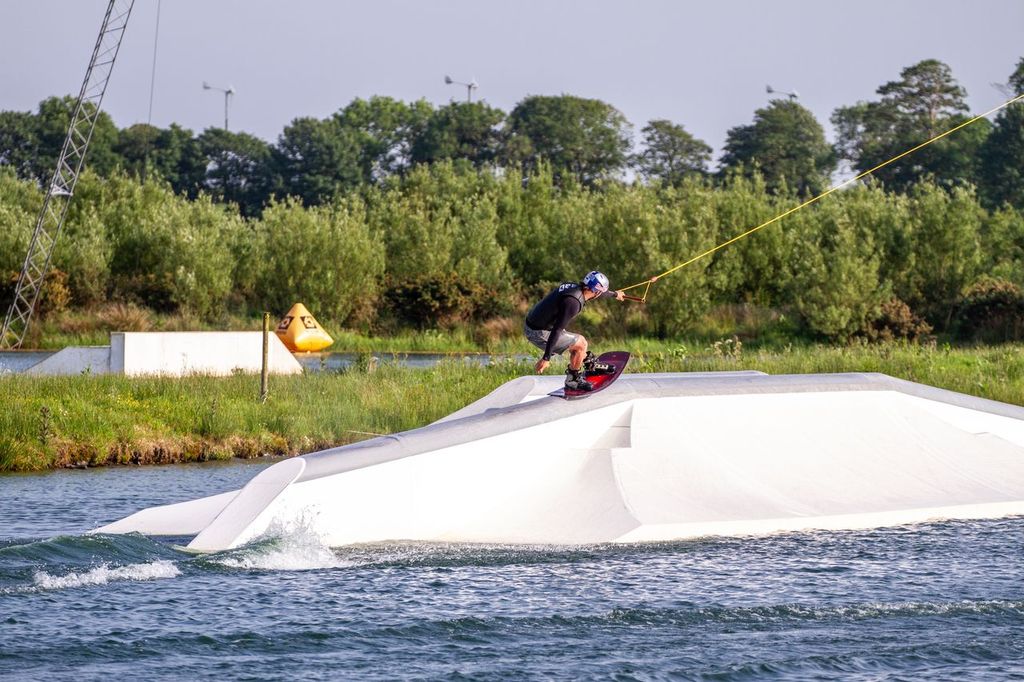
A lesson usually starts on land, covering equipment, starting position, signals and what to do when you fall. Your first attempts follow, with instruction and breaks between them.
- Before entering the water: explain your experience, check your bindings and buoyancy equipment fit, and listen to the centre’s rules.
- Your first goal: get up and ride in control. You do not need to jump to enjoy your session.
- Next: work on posture and direction with your instructor. At a cable you will also learn how to return to the starting area.
- Afterwards: ask what to repeat next time and which session format will help you progress.
There is no magic number of attempts. Some people get riding quickly; others need several sessions. Falling is part of learning. Aim for control rather than turning your first ride into a test of strength.
When booking, check your actual time on the water, whether turns are shared and what the lesson includes. Explore our guide to wakeparks and schools in Spain for places to start.
What equipment do you need for wakeboarding?
- Board and bindings: matched to your weight, foot size, ability and intended use. Before riding obstacles, check that the park permits your board and fins.
- Buoyancy equipment: suitable for the activity, with the required buoyancy and approval. An impact vest is not the same as a life jacket; check your school’s requirements.
- A watersports helmet: according to the discipline and centre rules; it is a usual part of cable-park equipment.
- A wetsuit: when water and air temperatures call for one.
- Rope and handle: boat riding uses a set suitable for wakeboarding. At a cable park, the facility provides the towing system.
The handle is the grip you hold; the rope connects it to the towing system. They may be sold as a complete set, but they are different components.
Try school equipment before buying and check what rental includes. Once you know whether you will regularly ride cable, obstacles or boat, you can choose your own setup with more confidence. You can explore equipment in our wakeboard shop.
Wakeboarding, wakeskating and wakesurfing: the differences
Wakeboarding
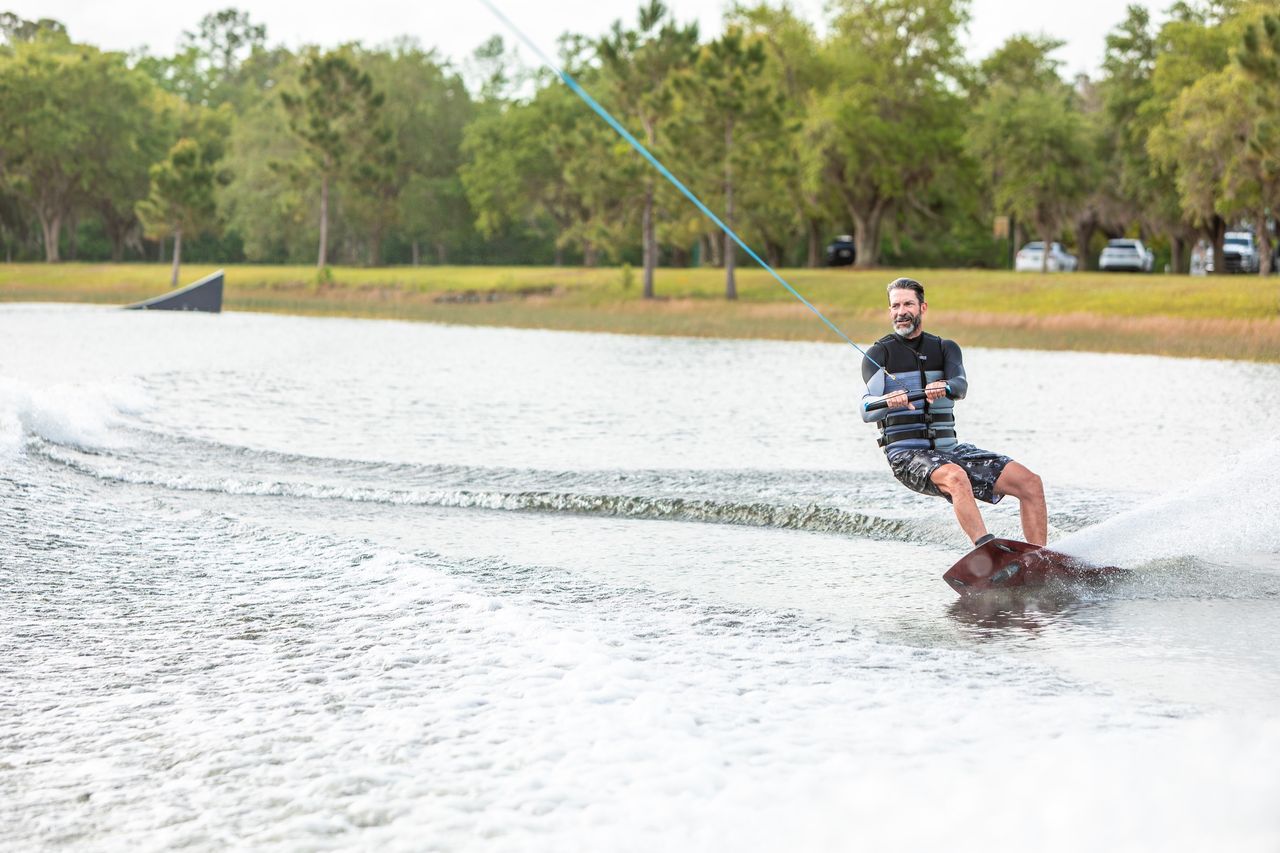
Your feet are secured by bindings and you keep hold of the handle throughout the run. You can ride cable or behind a boat.
Wakeskating
The board has no bindings and the tricks have a close connection to skateboarding. It can also be done at a cable or behind a boat. Read more about what wakeskating involves.
Wakesurfing
You surf the wave of a boat designed and approved for this activity. A rope helps you start and find your position; once the wave provides enough push you can release it. It should not be attempted behind just any motorboat.
Dedicated wake boats usually support wakeboarding and wakesurfing with different settings. Our wakeboard boat guide explains the distinction.
Safety and learning: what to understand first
Start with an instructor, explain your swimming ability and follow the facility’s rules. Agree signals before riding and learn to release the handle when you fall. Keep hands and body out of rope loops and respect starting areas and other riders.
Helmet, buoyancy equipment and supervision are part of preparation, alongside understanding the setting. Avoid improvised towing with vehicles or attempting features before you are ready.
A short history: from skurfing to wakeboarding
Wakeboarding has roots in towing surfboards and developing dedicated boards and bindings. The name combines wake, the trail of water left by a boat, and board.
Its pioneers include Tony Finn, associated with the Skurfer, and Jimmy Redmon, as described in Liquid Force’s history. Liquid Force was founded in 1995; Hyperlite dates its origins to 1991. The sport evolved through multiple contributions rather than a story that needs to be reduced to one inventor.
Getting started: frequently asked questions
Do I need to know how to surf or snowboard?
No. That experience may help you recognise the feeling of riding a board, but beginner lessons can start from scratch.
Do I have to buy equipment to try it?
Not necessarily. Many schools provide equipment; check your booking inclusions, available sizes and whether you need a wetsuit.
How much does a first session cost?
It depends on the centre, discipline, duration and equipment included. Compare equivalent lessons and actual riding time rather than treating a cable pass and private coaching as the same offer.
The next step is a lesson, not an endless equipment list. Find a school in our guide to riding spots in Spain and tell them you are getting started.
