
Gear · Choose your board
Cable or boat wakeboard? Before comparing graphics, brands or carbon construction, picture your next session: are you jumping the wake, riding features or learning your first starts?
Both disciplines use a board, bindings and a rope, but they ask different things of your equipment. A good choice supports your progression and suits the place where you actually ride.
Boat: edge and wake
You want to hold a line, build your edge and use the wake as a ramp. The way a board responds, releases and lands matters.
Cable: water and features
For obstacles, you need a suitable base and edges. Flex affects how the board feels when you press it.
The main differences at a glance
| What to compare | Boat | Cable with features |
|---|---|---|
| Main priority | Edge control and response off the wake. | Sliding on obstacles and feel in presses. |
| Construction | Often firmer; the exact model matters. | Park-specific flex and reinforcement. |
| Base | Never assume it is rail-ready. | Check that it is approved for obstacles. |
| Fins | Add grip; they may be moulded or removable. | Follow park and manufacturer rules before riding features. |
| Your decision | How you want to ride and jump. | The features and style of riding you plan to do. |
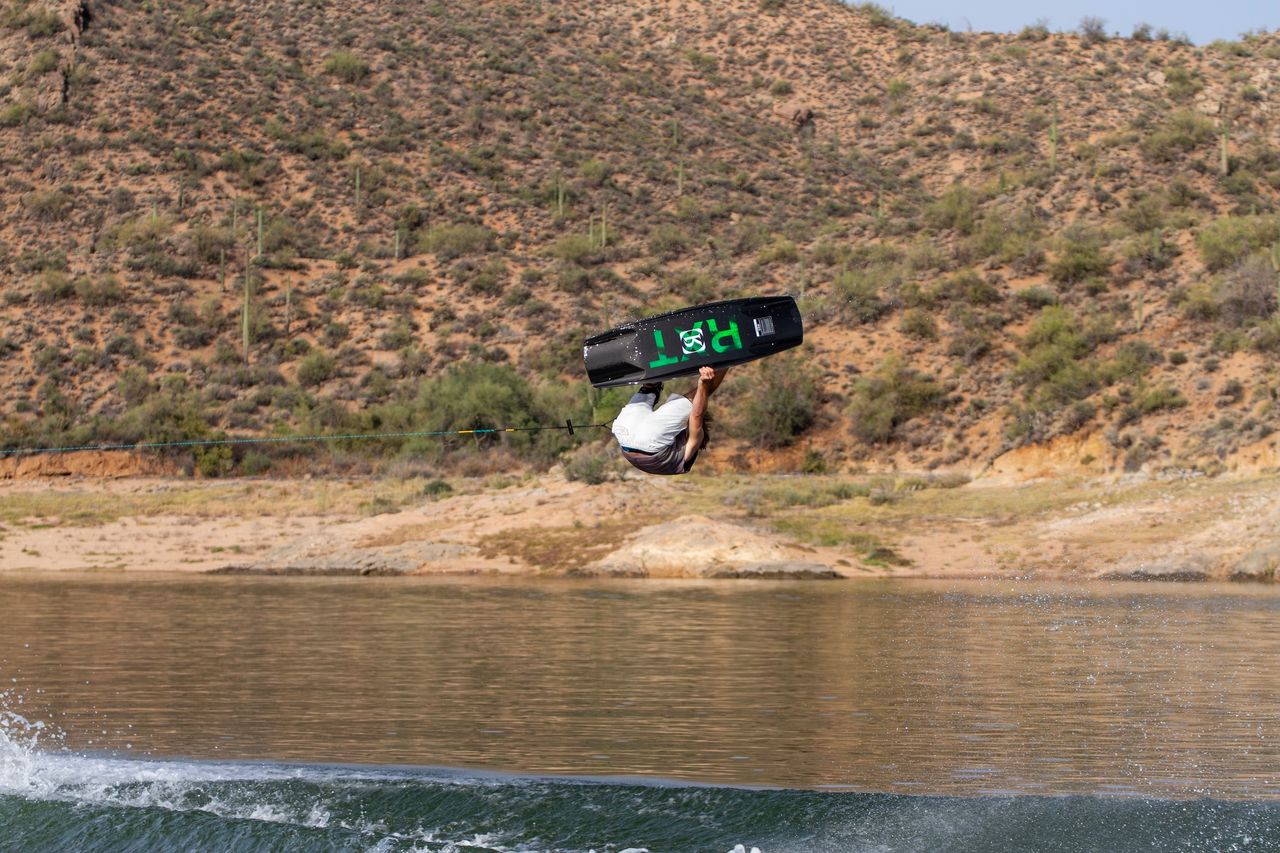
What to look for in a boat wakeboard
Behind a boat, the board works with your approach to the wake. You do not need the lightest or most expensive construction to start: predictable feedback and the right size are often a more useful investment.
Rocker is the board’s curve from tip to tail. A continuous rocker generally gives a flowing transition; a three-stage shape tends towards a more vertical release; a hybrid combines characteristics of both. These are different feels, not a beginner-to-expert ranking. The overall shape and your technique also influence the result.
What to look for in a cable wakeboard
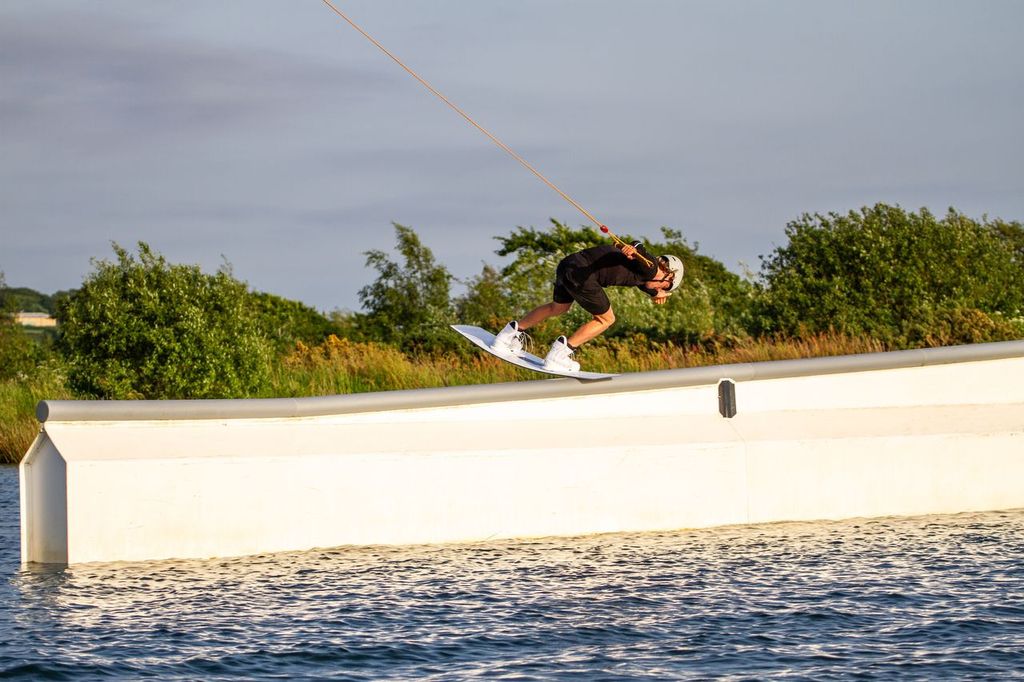
At a park with obstacles, start by checking feature compatibility. Then compare flex: boards do not all bend in the same way, and the softest option is not automatically the best choice for you.
Some boards flex more evenly; others provide more support between your feet while allowing the tip and tail to bend. That distribution affects presses and the feel underfoot. Compare descriptions within a range: flex numbers are not a universal measurement across brands.
A reinforced base helps with abrasion, but it does not make a board indestructible. Check wear, edges and the manufacturer’s intended use. Also distinguish feature riding from air tricks: sharing the same cable does not mean every rider needs the same board response.
Can one wakeboard do both?
It can, with compromises. A park board can be ridden behind a boat, although its feel and response may differ from a board designed for the wake. On a cable without obstacles, a boat board may be suitable if the school permits it.
The important limit comes when you hit features: removing the fins does not turn a boat board into a park board. The base, edges and any moulded fins remain unchanged. Before taking it onto obstacles, check manufacturer approval and the cable park’s rules.
You mostly ride one discipline
Buy for the sessions you actually do. Renting for an occasional day in the other discipline can make more sense than choosing a compromise board.
You regularly ride both
Try before you buy. Two dedicated boards may make sense over time; if you choose one, explicitly check its approved uses.
Ronix examples that explain the choice
There is no single winner for everyone. These models illustrate different approaches; check season, sizing and availability when choosing:
- Ronix District 2027: a boat board with hybrid rocker. Worth considering if you want an adaptable response as you progress on the wake. See the District at Simple Wake Shop.
- Ronix Utopia Variable Flex: a park-focused approach with tip and tail flex for presses. Judge it by its feel and your riding, rather than choosing it simply because it is a signature board. See the Utopia currently listed in our shop.
For a complete board-and-bindings budget, see our basic, intermediate and premium equipment guide.
Four checks before you buy
- Size for your weight: start with the specific model’s size chart, then refine the choice with advice based on your riding and preferences. Height alone is not enough.
- Binding compatibility: check mounting spacing, hardware and the correct screw length. Similar-looking systems are not necessarily compatible.
- A comfortable fit: secure support without pain. Removable liners can be handy when walking around a park, but they are not essential for every rider.
- A real-world test: renting or trying boards with a school helps you feel the differences before investing. Our guide to wakeboarding in Spain is a starting point.
Tell us where you ride
Your weight, level, budget and whether you ride boat, features or both help us recommend a board that fits your sessions.
Ask Simple Wake Shop → · Browse cable boards · Browse wakeboards
Just getting started? Read our introduction to wakeboarding and the safety checklist for your next session.
Further technical reading: Ronix boat board technology and Ronix park board construction. Images illustrate the disciplines and do not by themselves identify a product’s model year.
